Most people drink tea or coffee every day without thinking twice about what’s actually inside the cup. So when a customer asked, “Green tea, black tea, coffee… they all have something in them, right?” the pharmacist didn’t hesitate:
Tannins.
They’re the reason tea tastes a little dry, why red wine feels a bit astringent, and why your tongue sometimes gets that “grippy” sensation. But these tannins do more than shape flavor — they have a surprisingly big impact on how your body absorbs iron.
🧪 What Are Tannins, Really?
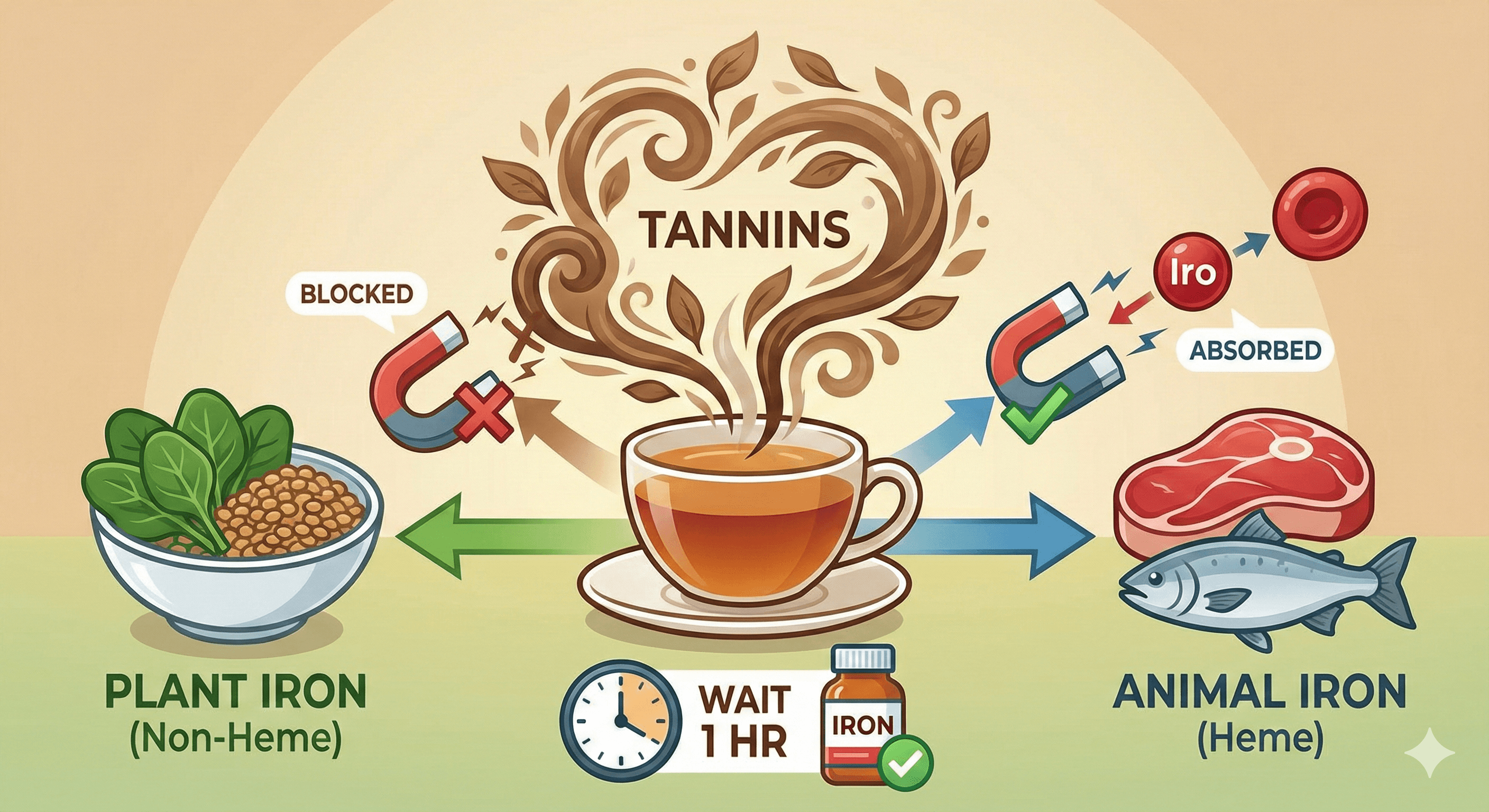
Think of tannins as large, complex plant compounds made of multiple ring structures all linked together. They’re naturally found in tea leaves, coffee beans, grapes, nuts, and cacao. Their structure makes them excellent at binding to certain minerals — especially non-heme iron, the form of iron found in plant foods like beans, spinach, nuts, and fortified cereals. Once tannins latch onto iron, the mineral becomes harder for your gut to absorb. This is why many people with low iron levels are told to avoid drinking tea or coffee with meals.
🩸 Heme vs. Non-Heme Iron — The Important Difference
Not all iron behaves the same way.
There are two types:
- Heme iron — from animal sources like meat, fish, and poultry
- Non-heme iron — from plant sources
Heme iron is absorbed easily, with or without help. Non-heme iron is more sensitive — it depends on stomach acidity, vitamin C, and whether anything is blocking it. Tannins are one of those blockers. They attach to plant-based iron and make it harder for your body to use.
This is why people who rely heavily on plant-based diets are often told to be careful about drinking tea or coffee with meals — the tannins reduce how much iron their body can take in.
☕ So… What If You’re Taking a Heme Iron Supplement?
Here’s the part customers get confused about.
If you’re taking heme iron, tannins in tea or coffee won’t block it the same way. Heme iron is absorbed through a different pathway — one that tannins can’t easily interfere with. So a cup of green tea won’t cancel out your supplement.
That said, most pharmacists still recommend spacing iron supplements and tea/coffee apart by about an hour. Not because tannins wreck heme iron, but because caffeine and acidity can sometimes irritate the stomach when combined with supplements. For people taking non-heme iron, though, tea and coffee are a real issue. Drinking them too close to your supplement can dramatically reduce absorption.
🍃 The Bottom Line
Tannins are natural compounds that add flavor, depth, and a bit of dryness to tea and coffee. But they also latch onto plant-based (non-heme) iron and make it harder for your body to absorb — which is why iron-deficient individuals are told to be careful with their timing.
If you’re taking heme iron, don’t worry — your green tea won’t sabotage it.
Just give your stomach a little space, enjoy your tea later, and let the supplement do its job.