Ever felt your muscles cramp out of nowhere, or found yourself unusually fatigued — even after a full night’s sleep? You might be low on magnesium, one of those quiet, behind-the-scenes nutrients that keeps everything running smoothly.
Magnesium plays a role in over 300 enzymatic reactions in your body — including energy production, nerve signaling, and muscle relaxation. Yet, because it works silently in the background, many people don’t realize when they’re running low until the symptoms start to show.
So if you’re wondering, “Which magnesium supplement should I actually take?” — here’s a clear, no-fluff guide before you grab one off the shelf.
⚖️ Magnesium-Only or a Multivitamin?
If you’re already taking a daily multivitamin or other nutrients like zinc or vitamin D, you might question whether extra magnesium is even necessary.
The catch? Most multivitamins only include a token amount of magnesium, often 10–20% of your daily requirement. That’s nowhere near enough for people dealing with stress, heavy exercise, or poor sleep — all of which increase magnesium demand.
That’s why many people choose a magnesium-only supplement instead. It lets you adjust the dose precisely and avoid doubling up on vitamins or minerals you already get from other products. Think of it as customizing your nutrient “playlist” instead of letting a generic mix decide for you.
🧪 Not All Magnesiums Are the Same
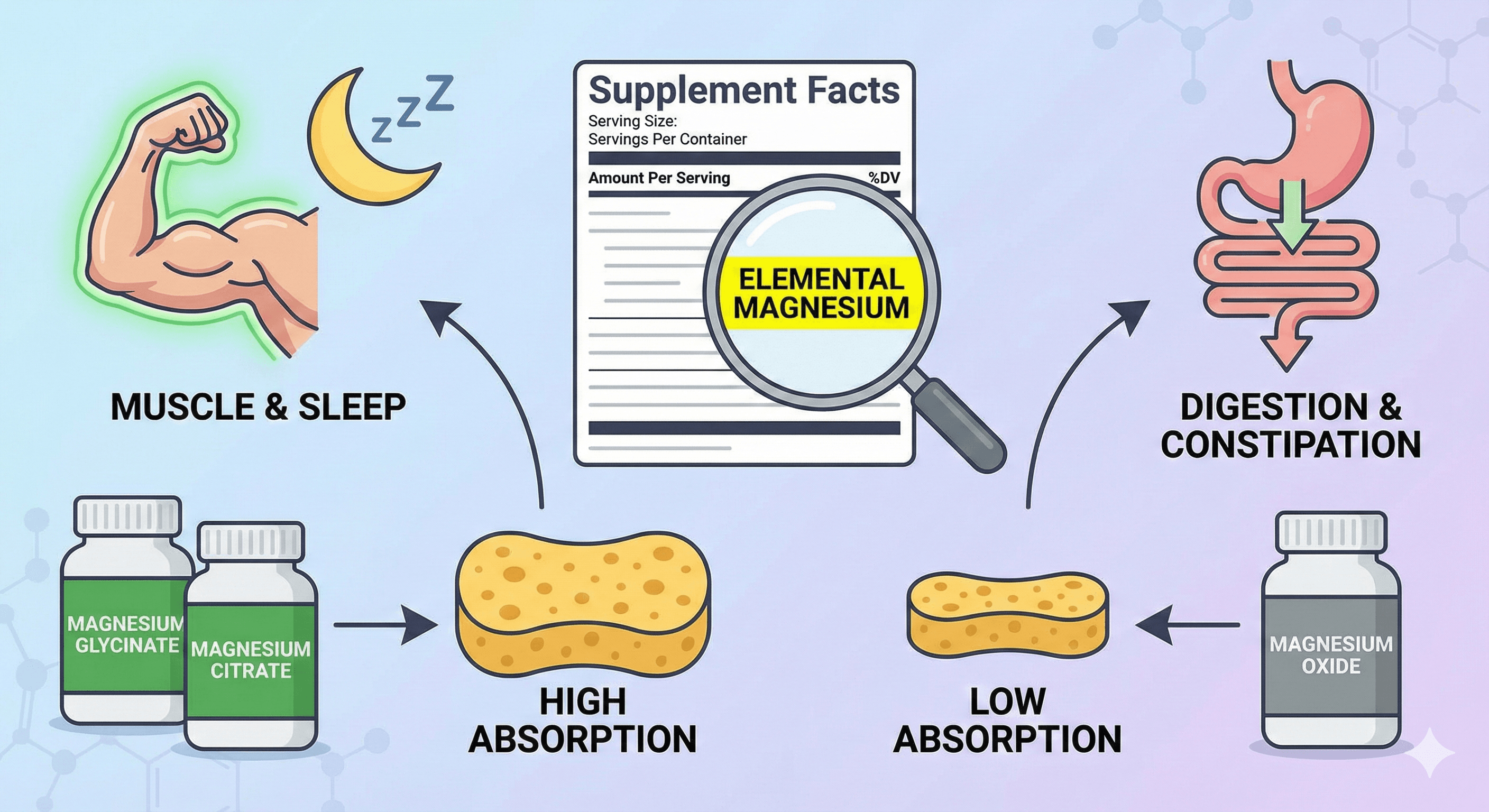
Here’s where supplement shopping gets tricky: magnesium doesn’t exist in pure form — it’s always bound to another compound, and that pairing determines how well your body absorbs it.
- Organic forms such as magnesium citrate, glycinate, and malate are usually absorbed more efficiently. They tend to be gentler on the stomach and better for general supplementation, though they contain less magnesium by weight.
- Inorganic forms like magnesium oxide or sulfate are more concentrated but less bioavailable — meaning much of it passes through your system unused.
So even if the label says “500 mg magnesium oxide,” that doesn’t mean your body will actually get 500 mg worth of usable magnesium.
📊 A Quick Comparison
For example, 1000 mg of magnesium oxide and 5000 mg of magnesium citrate may deliver roughly the same usable magnesium. Wild, right? Always check the “elemental magnesium” listed on the back — that’s the real amount your body can absorb.
🧴 Which One Should You Choose?
If you’re after better absorption (and don’t mind taking a slightly larger pill), go with magnesium citrate or glycinate. If you prefer a smaller dose or want to keep it simple, magnesium oxide is fine — just remember your body might not absorb as much of it. And if you’re dealing with specific issues like constipation, muscle cramps, or poor sleep, some forms may work better than others — your pharmacist can help match the right type to your symptoms.
✨ Bottom Line
When it comes to magnesium, it’s not just about how much you take — it’s about how well your body absorbs it. Look for the type of magnesium salt, check the elemental magnesium amount on the label, and choose based on your body’s needs (and your stomach’s tolerance). Because the goal isn’t just to add another pill to your routine — it’s to give your body the magnesium it can actually use.