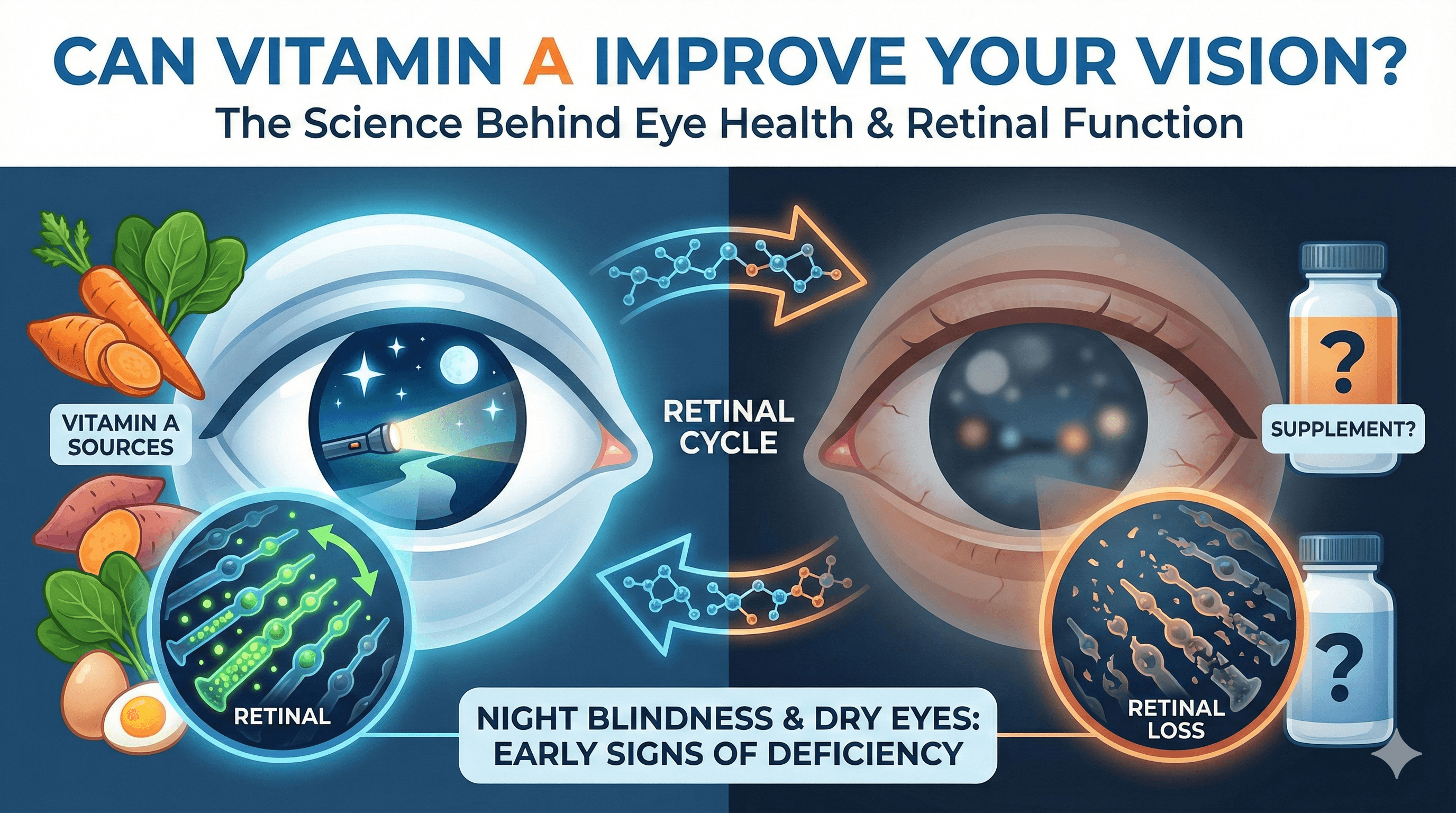
We’ve all heard it — “Eat carrots, they’re good for your eyes.” But what’s actually behind that old saying? The real hero here isn’t carrots themselves, but vitamin A, and more specifically, a compound it turns into called retinal.
🔬 The Science Behind the Saying
Inside your eyes are tiny cells called photoreceptors — rods and cones — that capture light and send signals to your brain so you can see. These cells rely on a light-sensitive protein that binds to pigment molecules. When light hits them, the pigment changes shape, sends the signal, releases, and then resets to do it all over again.
But here’s the catch: during that constant recycling, some pigment gets lost. That’s where vitamin A steps in. It helps rebuild and replace what’s lost, keeping the visual cycle running smoothly. Without enough vitamin A, this process slows down — and your eyes start to struggle in dim light.
🌙 Night Blindness and Dry Eyes
If you’ve ever found it unusually hard to see in the dark, or if your eyes often feel dry or gritty, low vitamin A might be part of the problem. In fact, one of the earliest signs of deficiency is night blindness, when your eyes can’t adjust well to low light. Over time, dryness and corneal damage can also occur, especially in severe cases of deficiency.
Getting enough vitamin A — through diet or supplements — helps prevent these symptoms and keeps your eyes healthy. The good news? Most people can meet their needs through foods like carrots, sweet potatoes, spinach, and eggs. But if your diet is limited or you already have symptoms, a supplement may help fill the gap.
💊 Should You Take a Supplement?
Vitamin A supplements aren’t a magic fix — they’re a support system. If you already eat well and don’t have vision issues, you probably don’t need extra. But for those with night-vision problems or chronic dryness, small doses under professional guidance can make a real difference.
And remember: more isn’t always better. Because vitamin A is fat-soluble, excess amounts can build up in your body and cause toxicity. Always check with a doctor or pharmacist before starting a new supplement.
👁️ Bottom Line
Vitamin A doesn’t just help your eyes — it keeps one of your most important biological cycles running. Think of it as routine maintenance for your vision: you may not notice it working, but without it, your world would look a lot dimmer.